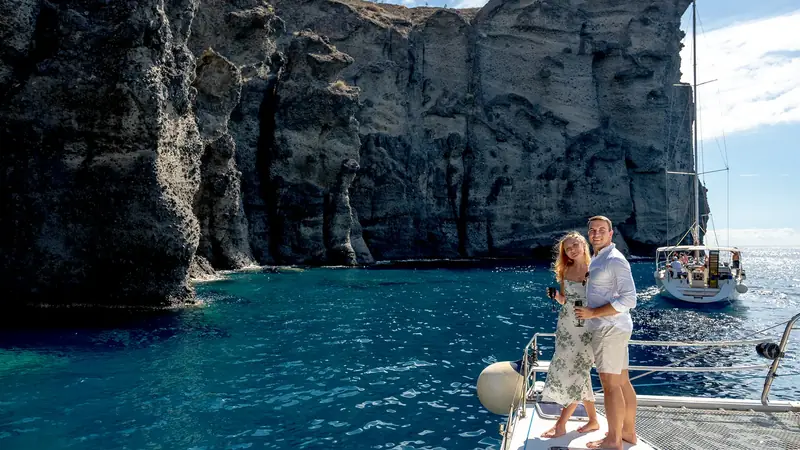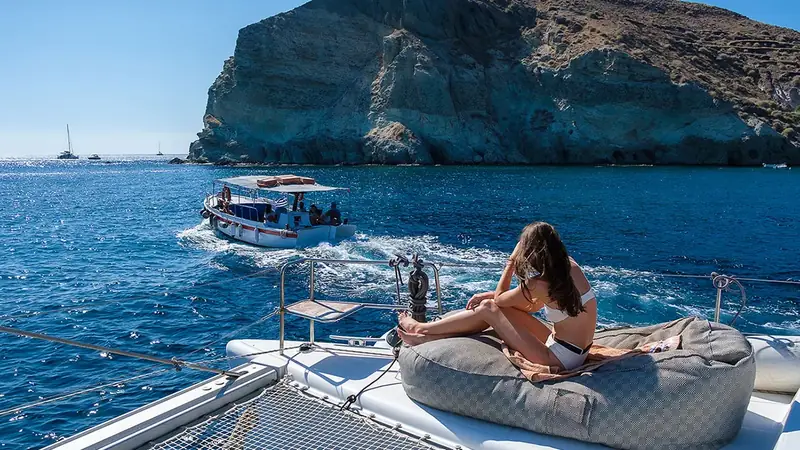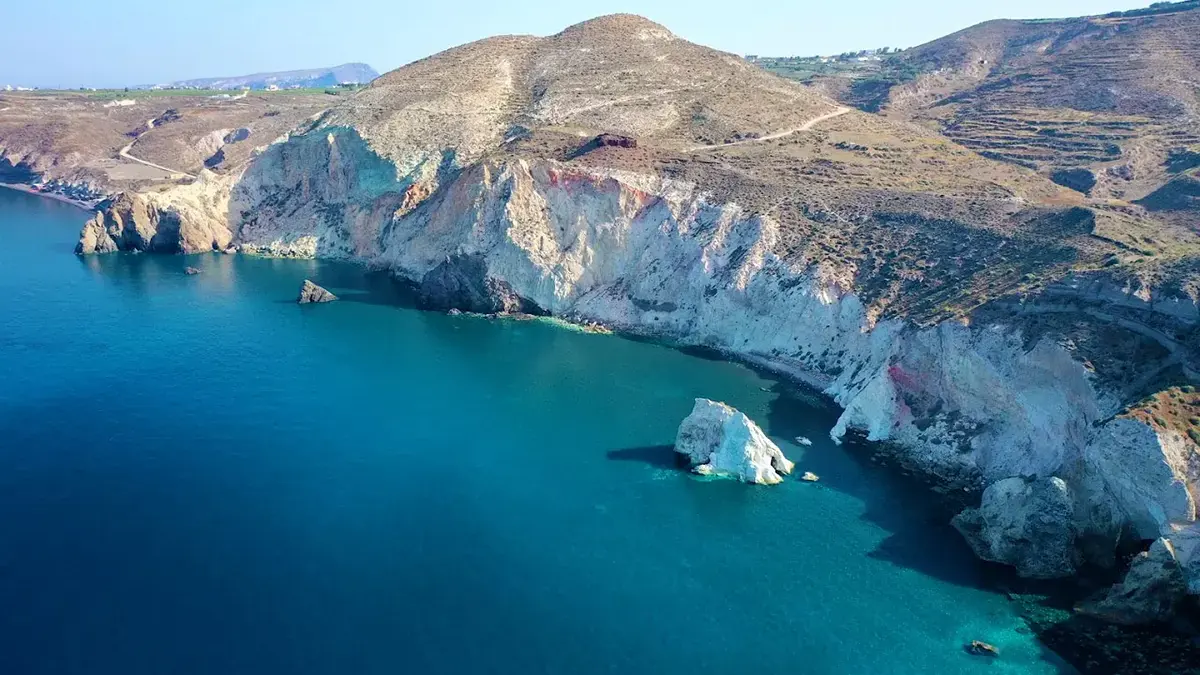
White Beach is Red Beach's introvert sister. Same volcanic drama, opposite palette: cliffs of pale pumice and ash pressed into cream-and-bone stripes, grey-white pebbles, and a band of shallow water that does a persuasive Caribbean impression when the sun is high. Because no path reaches it — the cliffs see to that — the white beach boat trip crowd is the only crowd it ever gets, and boats our size rarely share it with more than one other hull.
Why this is the connoisseur's swim stop
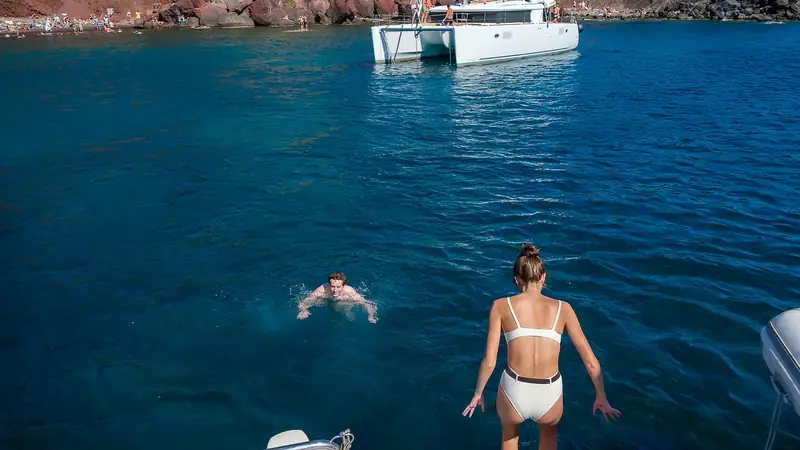
Everyone photographs Red Beach; regulars ask us to linger at White. The seclusion is real — when the engine stops here, the loudest thing in the cove is somebody deciding whether to jump from the bow. The swim from the boat toward the beach crosses water so clear you can count pebbles at six metres, and the pumice wall above bounces light back into the sea, which is why the shallows glow that improbable aqua even on a hazy day.
Snorkelling Mesa Pigadia
The wider bay is called mesa pigadia beach on the charts, and its eastern rocks are the best fish territory of the whole route: parrotfish grinding audibly at the rock, ornate wrasse, sea bream in slow squadrons, and anemones in the crevices. Follow the cliff line rather than the open water — the life hugs the wall. Masks and fins are already on board.
Photo tip
Frame a swimmer against the white cliff from deck height: the scale of the wall only reads with a human in it. Late morning light (daytime cruise) makes the aqua glow hardest; late afternoon (sunset cruise) pours honey down the pumice instead. Both work; the honey one wins arguments.
The honest caveat
There's no taverna, no sunbeds, no anything here — which is the entire point, but it means this stop is a swim stop, not a beach day. And on the handful of days the south swell wraps in, the skipper may swap the anchorage for a calmer pocket up the coast; the cove forgives nothing when the sea pushes. The route always delivers its three swims — occasionally the map shuffles them.